
Putting up a fence on flat ground is mostly about running a straight line. A slope changes that. The ground drops, the posts no longer sit at the same height, and the fence has to follow the land without looking crooked. Add drainage, varied soil, and the damp Pacific Northwest weather, and installing a fence on a slope becomes a job that needs real planning. Homeowners in Poulsbo, Silverdale, Bremerton, Gig Harbor, and Bainbridge Island often run into this. A fence company with hands-on experience can plan the layout properly before any work starts. Puget Fence Inc. has built fencing across Western Washington for many years, and we bring that experience to every sloped property we visit.
What Makes Fence Installation on a Sloped Yard Different?
A sloped yard asks more of a fence than a flat lot does. Each section has to respond to the ground beneath it, and a small mistake at the top of a hill shows up all the way down.
Understanding the Slope of Your Property
Your property slope is how much the ground rises or falls across the yard. Some yards tilt in a single direction. Others level off and then drop again, which changes where a section should start and stop. When we visit, we look at which way the ground falls, how steep it gets, and where it shifts. We also check the yard grading around your home, because the way the soil has been shaped affects how water runs along the fence line.
Challenges of Fencing on Uneven Ground
Fencing on uneven ground raises problems that a flat yard never presents.
- Panels will not sit evenly with the ground unless the layout is planned section by section.
- Water running downhill can erode the soil around fence posts.
- Soft or mixed soil may not hold posts firmly in every spot.
- A top line that wanders up and down makes even a well-built fence look unfinished.
You can manage each of these when you catch it early, which is why our assessment always comes first.
How Is Fencing Installed on a Sloped Yard?
Our process for sloped yards runs in four stages. Each one sets up the next.
Step 1: Assess and Measure the Property
We walk the planned fence line with you and measure the full boundary. Along the way, our fence contractor notes the slope, where the ground changes, how water moves, what the soil is like, and anything in the way, such as trees. These notes tell us how to divide the fence into sections.
Step 2: Choose the Right Fence Design
Next, we sit down with you to talk through what you want the fence to do for your yard. Privacy, security, and appearance can pull in different directions, so we sort out your priorities early. We build custom designs to match the height and style to your property. This is also when we decide between a stepped fence and a racked fence.
Step 3: Install and Position the Fence Posts
Posts do the heavy lifting in any fence, so we put the most care into them. Using the measurements from Step 1, we set each one plumb, even on sloping ground, and adjust the spacing to match the grade. A firmly set post gives the panels something steady to hang on, which lets the fence stay straight through storms and wind.
Step 4: Attach and Align the Fence Panels
Once the posts are solid, we hang each panel and check it against the one beside it. The goal is a top line that runs smoothly from one section to the next, and a bottom edge that hugs the ground as closely as the design will allow.
If you have a sloped yard and want a clear plan, call Puget Fence Inc. or message us through our contact page for a free estimate.
Stepped vs. Racked Fencing: What’s the Difference?
Either layout can work on a sloped yard. The difference is how the panels sit against the ground.
| Feature | Stepped Fence | Racked Fence |
| Panel position | Panels stay level and drop in sections | Panels angle to follow the ground |
| Appearance | Structured lines that resemble stairs | A smooth, continuous line |
| Best suited for | Steeper grades | Gentle to moderate slopes |
| Base of the fence | Triangular gaps can form beneath each section | The base stays close to the ground |
Neither layout is better in every case. Your yard’s slope and the look you want decide it, and we’ll explain your choice during your consultation.
Choosing the Right Fencing Material for a Sloped Yard
The material changes how a fence looks and behaves on a slope. For residential and backyard fencing alike, Puget Fence Inc. offers several options, so you can choose what suits your yard.
- Cedar: Any height, any style, built to order. Cedar’s natural oils make it a good match for our wet Pacific Northwest weather, and it resists insects and fungus over the years.
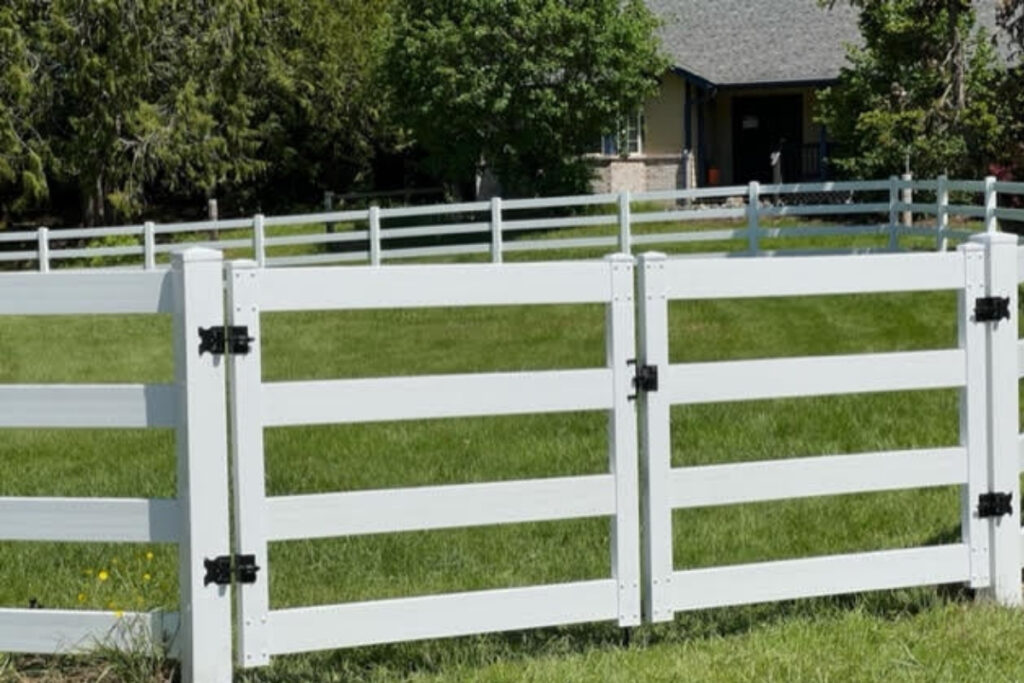
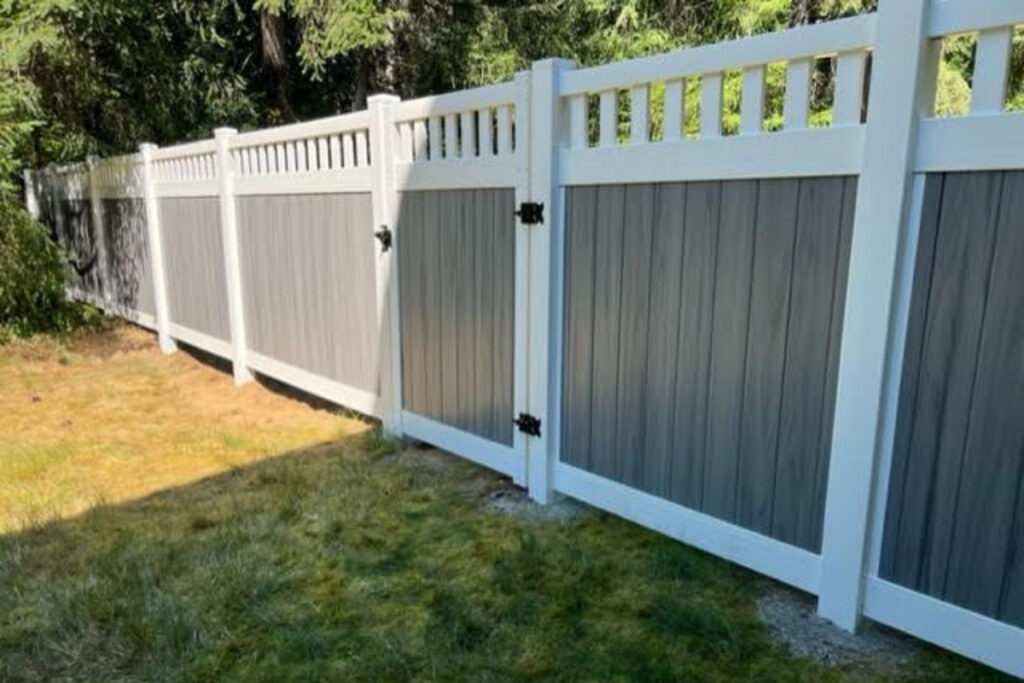
- Vinyl: If you’d rather not think about upkeep, vinyl is the easy choice. It won’t need staining or painting, and you can choose privacy, picket, or ranch styles.
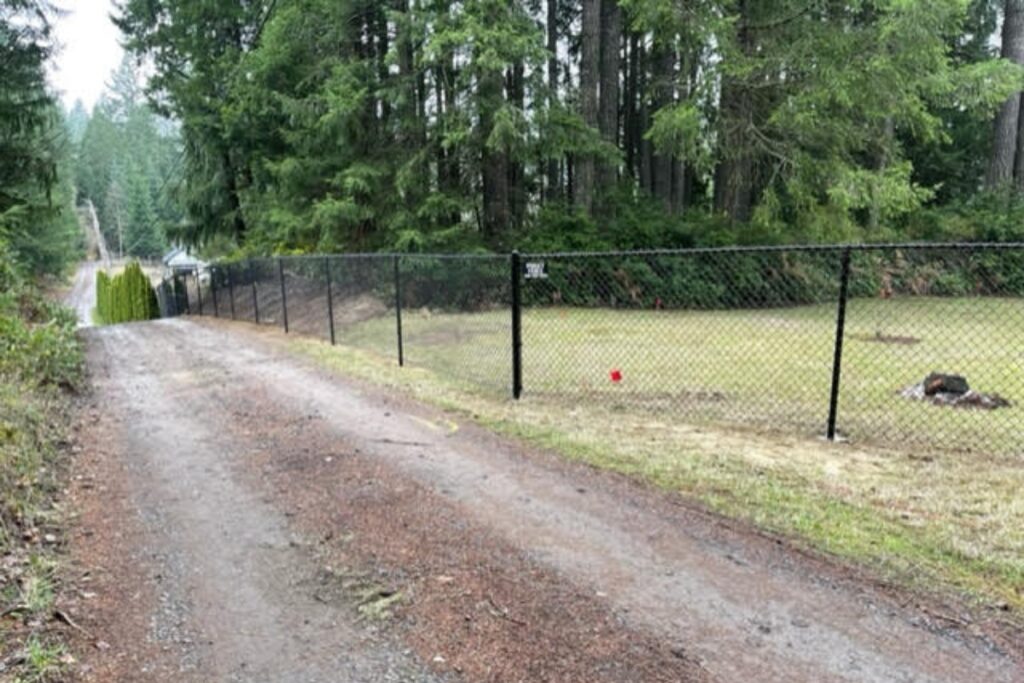
- Chain Link: If you want something sturdy that won’t strain the budget, chain link does the job. Galvanized and vinyl-coated versions both resist rust, and adding privacy slats or a decorative touch can make it look much less plain.
- Ornamental: Aluminum is lightweight, strong, and rust-resistant, while wrought iron adds elegance to a property.
We also install gates and agricultural fencing to complete your layout. When choosing a fence for sloped yard conditions, start with what you need the fence to do, then pick the material that fits.
How to Prevent Gaps Under a Fence on a Slope
Gaps at the bottom of a fence cut into privacy and security, and installing a fence on a hill makes them more likely. A few early decisions can keep them small.
- On gentle slopes, a racked fence lets the panels follow the ground.
- On steeper ground, shorter stepped sections keep each gap smaller.
- Your fence contractor should note dips and rises while measuring so section lengths fit the land.
- Getting the posts in the right spots lets each panel sit cleanly against the slope.
Fencing a sloped yard works best when the design follows your land instead of fighting it. Done right, the fence sits cleanly against the ground and looks like it belongs there.
What Should You Consider Before Installing Fencing on a Slope?
Think through these questions before you book a fence installation company.
- What’s the fence for? Think about whether you mainly want privacy, security, or a better-looking yard. That answer shapes almost every other choice.
- Which material fits your needs? Some hold up better in rain and damp than others, so weigh how much upkeep you’re willing to take on.
- How does your yard lie? A slope or uneven grading changes how the posts and panels need to be laid out, so it’s worth sorting out before you commit to a plan.
- Where are your property lines, and are there local requirements to follow?
- Where will the gates go, and is there room for them to work on uneven ground?
Having these answers ready makes your estimate more useful and keeps fence installation on a slope running smoothly.
Common Mistakes When Installing a Fence on a Sloped Yard
- Skipping careful measurements, which leaves sections that do not line up
- Ignoring drainage around the fence posts
- Forcing a layout that does not suit the grade
- Letting the top line of the fence panels wander
- Taking on a steep job without the right experience
When Should You Hire a Professional Fence Company?
Some slopes are easy enough to handle. Others call for a professional, especially when:
- Your yard is steep or changes direction across the lot
- Water collects along the planned fence line
- A visible boundary needs a clean finish
- Your plans include gates on uneven ground
Puget Fence Inc. is a fence installation company serving Kitsap, Pierce, Mason, and Jefferson Counties. Along with installation and repair, we offer fence renewal, restoration, and commercial fencing. Our team works with you every step of the way, and the process stays simple. You make an appointment, we send a quote, you accept it, and we complete the project. Estimates are free, and we stand behind our work with a satisfaction guarantee.
Get a Fence That Fits Your Slope
A sloped yard needs accurate measurements and a fence design built for the land. Contact Puget Fence Inc. through our contact page or by phone to book your free consultation, and our team will build a fence that suits your property.