Steel doesn’t rust slowly; it rusts strategically, starting at the weakest point and spreading until the whole structure is weak. A chain-link fence that looks fine in the spring can look awful by the fall, especially in places with a lot of moisture where oxidation works around the clock.
Most property owners don’t realize the damage is happening until it’s already expensive to fix. The difference between a fence that lasts five years and one that lasts fifty often comes down to a single decision made before installation.
At Puget Fence Inc., we’ve helped thousands of homeowners and businesses across Western Washington make that decision correctly before rust ever gets the chance.
This guide walks you through how a galvanized chain link fence actually defends itself against rust, and why the coating method behind it changes everything, the science behind it, what warning signs to watch for, and how to keep your fence performing for decades, whether you’re evaluating rust-resistant fencing options or maintaining an existing installation.
What Causes Rust on a Chain Link Fence?
Rust is a predictable chemical reaction. Iron or steel oxidizes and turns into iron oxide when it comes into contact with both oxygen and water at the same time. In Western Washington’s persistently wet climate, that reaction happens almost perfectly every day.
What makes it go even faster:
- Salt-laden air near Puget Sound penetrates coatings faster than standard humidity
- Soil contact at the base of galvanized chain link fence posts creates a persistent moisture trap
- Surface scratches that bypass protective coatings and expose raw steel directly to the elements
- Standing water and debris are collecting at low points in the fence line
The real threat isn’t rain. It’s what rain does to unprotected steel over 730 consecutive days of exposure.
Why Rust Starts Faster Than Most Property Owners Expect
Here’s what most guides won’t tell you: rust doesn’t wait for visible damage to begin. If steel isn’t treated or has a bad coating, tiny flaws on the surface let moisture in long before any orange streaks appear. Oxidation has usually already gone several layers deep into the metal by the time the surface starts to change color.
Chain link fence corrosion protection needs to work at the molecular level, not just on the surface. This is precisely why the type of coating applied during manufacturing determines almost everything about a fence’s long-term performance, and why strategies to prevent rust on chain link fence must start before the fence ever goes in the ground.
What Is Galvanization?
Galvanization is an anti-corrosion treatment that bonds a zinc layer to steel, creating both a physical barrier and an electrochemical defense against rust. Zinc doesn’t just cover the steel; it reacts with things in the environment, corroding instead of the steel underneath it.
Two methods are used in fencing:
| Method | Zinc Thickness | Performance | Ideal Use |
| Hot-Dip Galvanization | 3–5 mils | Exceptional | Outdoor, high-moisture environments |
| Electro-Galvanization | 0.2–1 mil | Moderate | Light-duty or interior applications |
In the hot dip galvanization process, steel is dipped in molten zinc at about 840°F, which makes a thick coat that is bonded to the metal. In the electro galvanization vs. hot dip comparison, the difference in thickness alone makes hot dip the clear choice for fence durability in outdoor weather.
How Galvanization Protects a Chain Link Fence from Rust
Zinc coating rust prevention works through two simultaneous mechanisms that standard coatings simply cannot replicate.
- Physical Barrier Protection completely covers the steel surface, so oxygen and moisture can’t get to it. Rust cannot form under the zinc coating on a steel fence as long as it stays in place.
- Sacrificial (Electrochemical) Protection is what truly sets galvanization apart. Zinc is electrochemically active, meaning it corrodes before the underlying steel does. Even if the surface is scratched, the zinc around it keeps pulling the corrosive reaction away from the steel that is exposed. This oxidation prevention in steel continues working through minor surface damage, something no paint-based coating can offer. Together, these two mechanisms define the corrosion resistance of galvanized steel and explain why how long a galvanized chain does link fence lasts is measured in decades rather than years.
Why Not All “Rust-Resistant” Fences Perform the Same
“Rust-resistant” and “galvanized” are not the same things, and the difference in how well they work in real life is big. A fence that is advertised as rust-resistant may only have a thin electro-galvanized coating, a painted finish, or a basic zinc-alloy spray. None of these options offers the same level of zinc layer protection as a true hot-dip galvanized product.
In the galvanized vs. vinyl coated chain link fence comparison, vinyl coating adds a polymer layer over the galvanized wire that enhances moisture resistance and makes it one of the best chain link fence for coastal areas options available. But the galvanized base is still doing the work of protecting the structure underneath; the vinyl just makes what’s already there stronger. Chain link galvanized fence product made to verified hot-dip specifications always does better than “rust-resistant” options in places where the humidity is high and the temperature changes from freeze to thaw.
A fence is only as rust-resistant as its weakest component. A single poorly defined gate can ruin an otherwise great installation.
Types of Galvanized Chain Link Fencing
Not every galvanized item is made for the same use. At Puget Fence Inc., we help clients choose the right specifications for their needs for security and the environment.
- Standard hot-dip galvanized chain link: The backbone of residential and commercial perimeter fencing, reliable and built for decades of outdoor exposure.
- Vinyl-coated galvanized chain link: A polymer layer applied over galvanized wire for enhanced moisture resistance and color options, particularly effective in coastal environments.
- Galvanized chain link fence posts: Posts bear the full structural load and face the most intense ground-level moisture. Hot-dip coating on posts is non-negotiable for long-term performance.
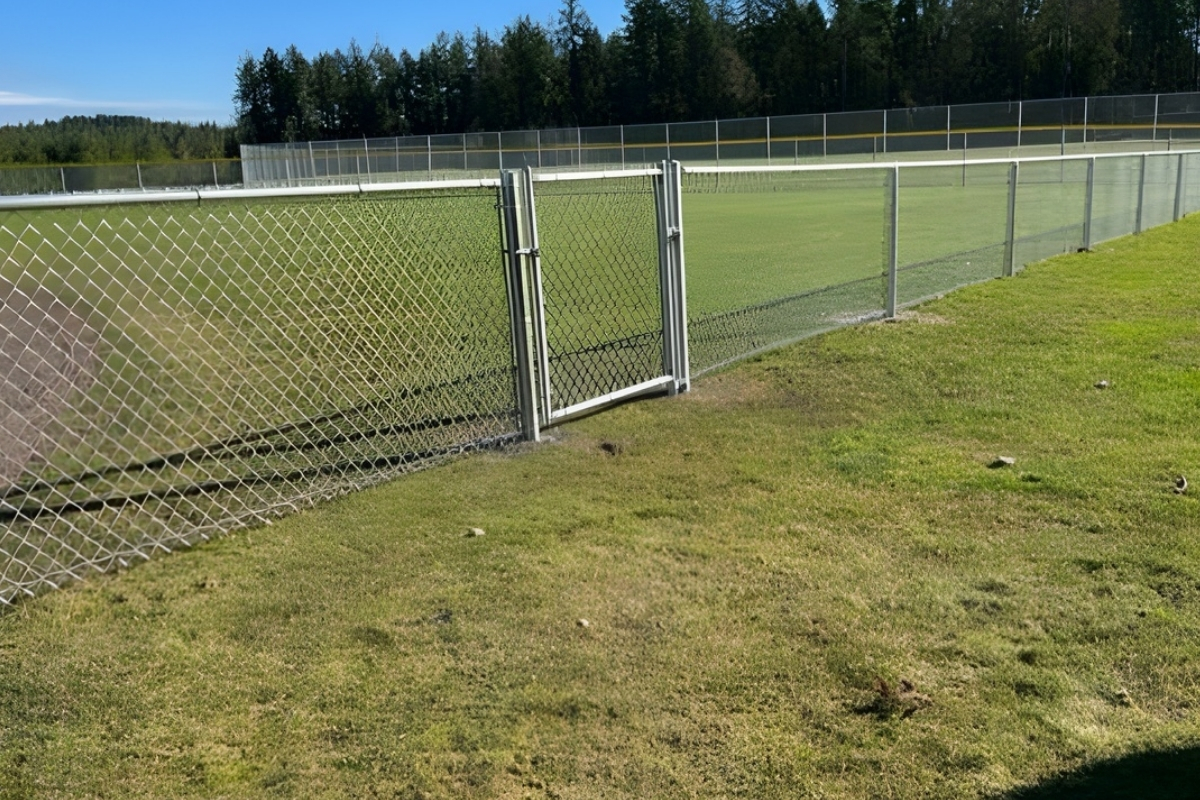
- Galvanized chain link fence gate and driveway gate: Gates experience considerably more mechanical stress than static fence sections. A galvanized chain link fence gate built to the same specification as the surrounding fence ensures consistent protection across the entire installation. Galvanized chain link fence gates that are not built to the right size for the fence line are often the first thing to break on any property.
Signs Your Chain Link Fence May Be Rusting
Finding deterioration early on can mean the difference between a targeted repair and a full replacement. Look out for:
- Orange or brown streaking along wire or post surfaces
- White powdery deposits, which indicate zinc oxide forming as the protective layer is being consumed
- Flaking, bubbling, or pitting on any metal surface
- Sagging mesh sections where structural integrity is weakening
- Rust staining on concrete or pavement directly beneath the fence line
Once signs of rust on a metal fence are visible on the surface, the process has already been advancing underneath for some time. Chain link fence rust repair is entirely feasible in the early stages, but if you wait, the damage will get worse, and the cost of fixing it will go up a lot.
How to Maintain a Galvanized Chain Link Fence
The lifespan of a galvanized fence is heavily shaped by how it’s maintained after installation. Even the most weather-resistant fencing benefits from consistent, straightforward upkeep.
- Every year, rinse the fence to get rid of salt, dirt, and biological buildup that keeps moisture against the metal
- Apply zinc-rich cold galvanizing compound immediately to any scratched or exposed areas to restore the zinc layer protection
- Clear vegetation growing against the fence, as it traps moisture in sustained contact with the metal surface
- Inspect galvanized chain link fence posts at ground level each spring, where deterioration most commonly begins
- Lubricate all hardware on galvanized chain link fence gates and driveway gate mechanisms regularly to reduce wear at connection points
Your Fence’s Lifespan Was Decided Before It Was Installed
Galvanization remains the most proven form of metal coating technology. It protects the steel at the molecular level, long before the weather can get to it. During maintenance, there is no difference between a five-year fence and a fifty-year fence. When the coating method, product grade, and installation quality are decided, that’s when it’s made.
With over 25 years in the field and more than 864,000 feet of fencing installed across Kitsap, Pierce, Mason, and Jefferson Counties, Puget Fence Inc. understands what it takes to build a fence that holds up, not just through the first winter, but through decades of Pacific Northwest weather. We’ve worked with homeowners, businesses, and commercial properties across Bremerton, Poulsbo, Silverdale, Port Orchard, Gig Harbor, Port Townsend, and the surrounding region, and every project reinforces the same truth: the right specification from day one saves significant time, money, and frustration down the road.
Don’t wait for rust to make the decision for you. Call Puget Fence Inc. at (360) 509-5095 to schedule your free consultation and estimate, and let’s build something that actually lasts.