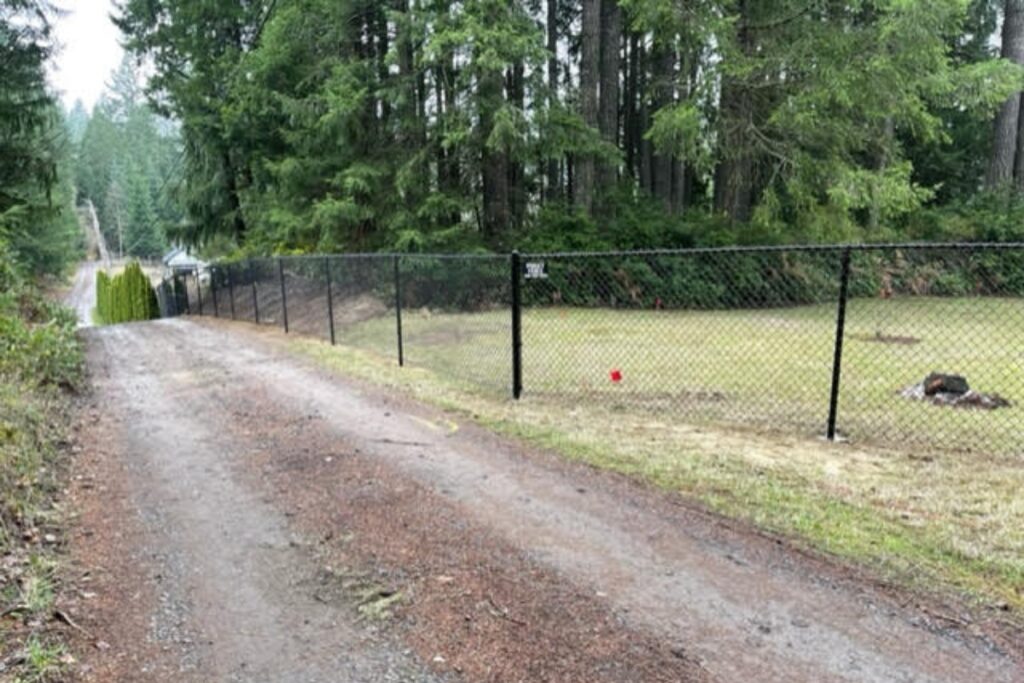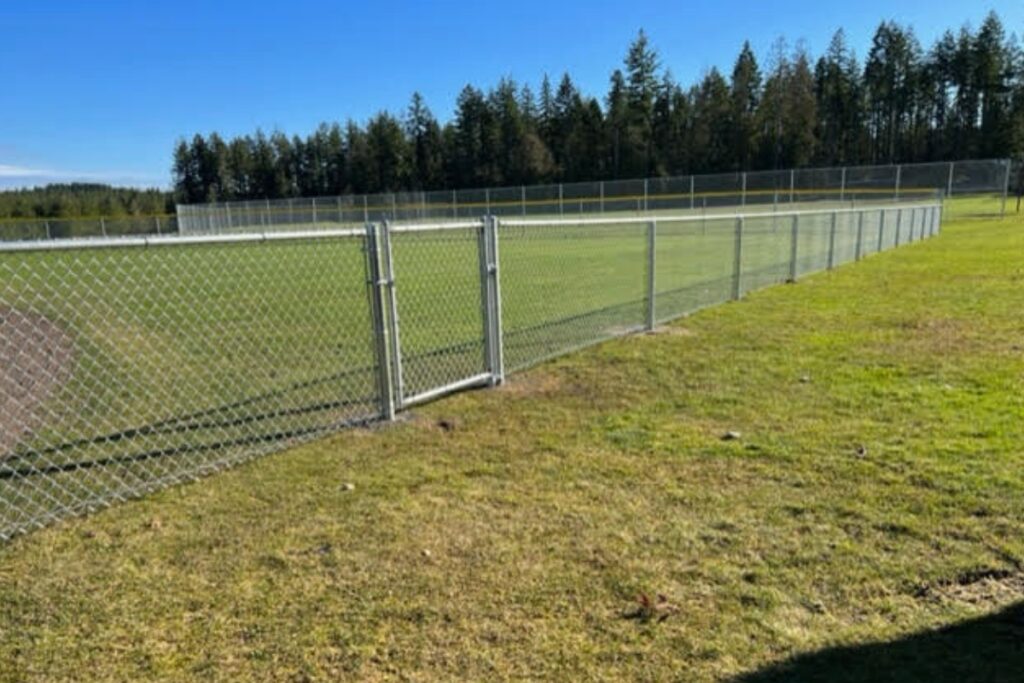

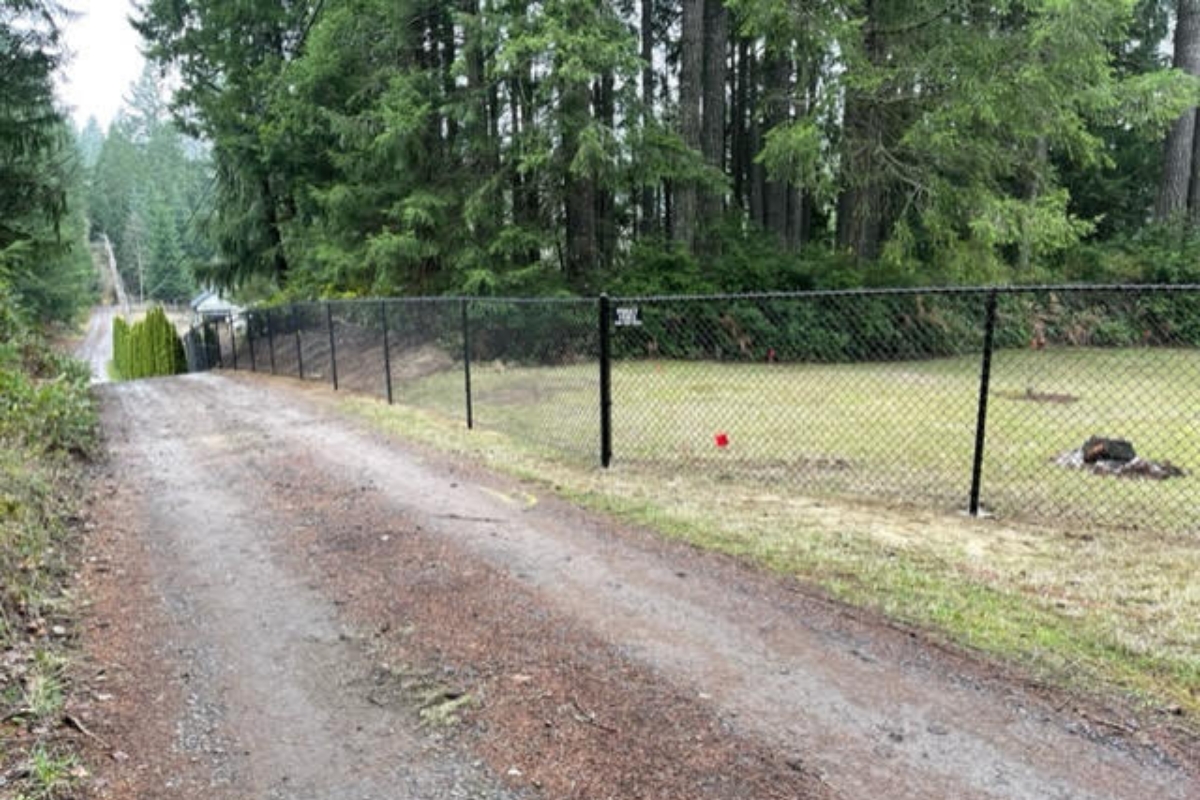
Most homeowners don’t think about their landscaping until the fence line crew shows up and someone asks, “So what do we do about that cedar?” By then, options are limited. A little planning up front saves a lot of second-guessing later.
This guide covers the practical questions that come up when fencing has to share space with mature trees, garden beds, or shrubs that have been growing for years. Fence-around-trees projects come with their own set of considerations, and working with an experienced fence company from the start makes the process much smoother. If you’re in Poulsbo, Silverdale, Bremerton, Gig Harbor, Bainbridge Island, or anywhere else in Western Washington where established landscaping is the norm, this is worth working out before the project starts.
Why Landscaping Should Be Part of Your Fence Plan
A fence and the yard around it aren’t really separate projects. Where the fence goes affects how you move through the property and how your trees grow. Treat them as connected from the start, and fence line planning gets a lot easier.
1. Protecting Existing Trees and Plants
Trees look simple from the outside, but most of the structure is below ground. According to the University of Minnesota Extension, most tree roots sit within the top 18 to 20 inches of soil and often extend well past the dripline. That’s why installing a fence near trees can go wrong even when the layout looks like it gives the trunk plenty of clearance. Washington State DNR advises against cutting roots larger than 4 inches in diameter and recommends extra care within a tree’s critical root zone.
Worth keeping in mind
- Flag mature trees before the fence line is finalized
- Think about the root zone, not just what’s visible above ground
- If you hit a significant root, pause and reassess
2. Balancing Property Boundaries and Landscape Design
The straightest line between two corners isn’t automatically the best layout. A homeowner in Silverdale might want privacy fencing along a backyard edge with shrubs already established there. Shifting the fence eats into yard space, and running it through the bed creates maintenance headaches later. Usually there’s a layout that respects both the fence and landscaping already in place.
How Trees Can Affect Fence Installation
Roots complicate excavation, low branches can block crew access, and a tree that’s still growing will look different in a few years. The U.S. Forest Service notes that construction work, including trenching, grading, and soil compaction, can damage root systems, and that the area needing protection often extends beyond the visible canopy. That makes fence installation around trees something to plan for, not improvise around.
| What to Check | Why It’s Worth Checking |
| Trunk location | The obvious starting point, but not the whole picture |
| Root spread | Often extends well beyond the canopy edge |
| Low branches | Can limit access for crews and equipment |
| Fence height | Taller sections sit differently near nearby growth |
| Slope | Changes how posts and panels are positioned |
| Future growth | Shrubs and trees won’t stay their current size |
| Gate clearance | Needs open space to swing and function properly |
None of this is about forcing a perfectly straight fence line at any cost. It’s about building something that works with the property you have.
Understanding Tree Roots Before Digging Fence Posts
Roots don’t grow straight down from the trunk. The University of Minnesota Extension describes root systems as spreading outward through the upper layers of soil, with many feeder roots concentrated in the top 12 to 18 inches. A fence post near trees can still hit roots even several feet from the trunk.
| Trunk Diameter | Estimated Root Spread |
| 6 inches | Roughly 26–28 feet |
| 10 inches | Roughly 30–32 feet |
Estimates vary by species and soil, but the pattern holds: the trunk alone isn’t a reliable guide to where the roots actually are.
What Should You Do If Roots Are in the Fence Line?
Don’t default to cutting it out. The right call depends on the root’s size and its importance to the tree. Washington DNR recommends handling root disturbance within a critical root zone carefully and avoiding tearing larger roots out with equipment. For a valuable or older tree, a certified arborist can weigh in before you start digging.
Decide on fence post placement with the tree in mind, before the shovel comes out.
Planning a Fence Around Gardens and Flower Beds
A fence might keep animals out or mark the edge of a bed, but if you crowd it too close, maintenance becomes a hassle. Before finalizing anything, picture life after installation:
- Can you still reach the plants at the back of the bed?
- Is there room for a wheelbarrow to get through?
- Can you prune shrubs without squeezing into a narrow gap?
- Does the nearby gate open and close without obstruction?
A Better Approach to Garden Planning
Instead of asking where the fence can technically fit, ask where it can go so the garden and the fence both keep working, independently of each other. That small shift in thinking tends to produce a far more livable layout.
How to Handle Shrubs, Hedges, and Other Plants
Shrubs deserve the same attention as trees, even though they’re easier to overlook. An established hedge may already define a boundary, and smaller shrubs will eventually grow into whatever fence line sits nearby. The University of Minnesota Extension notes that shrub root systems can spread roughly 1.5 to 3.5 times as wide as the plant itself, with feeder roots often close to the surface, a real consideration when fencing around tree roots or other established plantings.
Before locking in the layout, it helps to walk past each shrub or hedge with a few questions in mind:
- Is it still developing, or has it reached its mature size?
- How much wider is it likely to get in the next several years?
- Does it sit directly along the proposed fence line?
- Would moving the line a foot or two spare it entirely?
Answering these ahead of time is easier than replanting a hedge after the fence goes in.
Choosing a Fence Layout That Works for the Whole Property
A solid fence layout starts with purpose: privacy, a defined boundary, security, containing pets, or simply improving how the property looks. From there, the layout needs to work with the existing landscape.
A Practical Fence-Line Planning Checklist
Walk the property and note
- Property boundaries and survey markers
- Existing trees and their approximate root zones
- Gardens, flower beds, and mature shrubs
- Slopes or elevation changes
- Planned gate locations, driveways, and walkways
- Space reserved for future landscaping
- Access needed for ongoing maintenance
A wooded property near Kingston or Seabeck presents different challenges than a compact lot in North Tacoma. There isn’t one fence line that works everywhere; the property decides that.
Common Fence Planning Mistakes to Avoid
Even a well-built fence can run into trouble when the planning stage moves too fast. A handful of missteps come up again and again, and most of them are easy to avoid once you know to look for them.
1. Measuring only the property corners: Walk the entire line and note trees, beds, slopes, and access points.
2. Treating the dripline as the full root zone: Roots often reach beyond the canopy, so treat the surrounding area with extra caution.
3. Planning only for today’s landscaping: A small shrub won’t stay small, and a young tree will look different in a few years.
4. Forcing a perfectly straight line: It may look clean on paper, but it can create unnecessary conflict with trees or beds that were never going anywhere.
5. Leaving gates as an afterthought, or overlooking construction access: Plan gates alongside the fence line, and make sure a crew has room to work safely.
How Professional Fence Installation Can Help
A professional fence company can look at the property as a whole, including the trees, the access points, and the material that fits the job, and put together a layout that holds up over time.
Puget Fence Inc. brings more than two decades of experience serving Kitsap, Pierce, Mason, and Jefferson Counties in Western Washington, with every project approached as a customized design rather than a one-size-fits-all layout. Here’s a quick look at what the company offers:
| Service | What It Covers |
| Wood and cedar fencing | Custom-built for the Pacific Northwest climate |
| Vinyl, chain-link, and ornamental | Low-maintenance and decorative options |
| Agricultural and gate fencing | Property boundaries, access, and containment |
| Commercial fencing | Security and durability for business properties |
| Installation and repair | New builds and fixes to existing fencing |
| Fence renewal and restoration | Bringing older fencing back to shape |
The process itself is simple: schedule an appointment, review a quote, accept it, and move forward to completion, backed by a one-year warranty and a free estimate.
What to Discuss During Your Fence Consultation
If mature trees or established landscaping are part of the picture, bring them into the conversation early. A few points are worth putting on the table before any work begins:
- Which trees and plants matter most to you
- Where the property boundary actually runs
- Areas where roots are likely present
- Fence style, material, and gate placement
- Landscaping that needs to stay untouched
For particularly valuable or sensitive trees, a certified arborist can offer guidance on root protection during construction. The earlier you bring up these details, the more flexibility you have.
Let the Fence Work With the Landscape, Not Against It
A good fence line doesn’t fight the yard it’s built in; it works with what’s already there. For homeowners across Poulsbo, Silverdale, Bremerton, Gig Harbor, Bainbridge Island, and the rest of Western Washington, that means paying attention to what’s growing above the soil and spreading beneath it before any digging starts.
This is exactly where the right fence company makes the difference. Puget Fence Inc. has spent more than two decades installing and repairing fencing throughout Kitsap, Pierce, Mason, and Jefferson Counties, working across wood, cedar, vinyl, chain-link, ornamental, agricultural, gate, and commercial fencing, in addition to renewal and restoration projects. We treat every layout as its own design, built around the property, its trees, and its existing landscaping rather than dropped in as a standard template. Each project includes a one-year warranty, and every estimate is free.
When you’re ready to talk through a fence around trees, gardens, or other established landscaping, reach out to our fence company at (360) 509-5095 for a free estimate and a plan built around your property.