A fence that looks tired doesn’t just sit at the edge of a yard; it sends a message before anyone even reaches the front door. Rust stains, sagging pickets, and peeling paint tell buyers and neighbors that maintenance has been ignored, and that impression rarely stays contained to the fence line alone. Homeowners who dismiss this signal often watch the perceived value of their property slip year after year, long before it is ever put on the market. Puget Fence Inc. has spent over 20 years helping homeowners avoid that exact outcome by installing fencing built to hold its appearance and function for decades.
This guide walks through what actually happens to a home’s value when black aluminum fencing panels go in, why the finish holds up the way it does, and what to check before signing off on a project. We’ll also talk about the safety codes that most homeowners don’t hear about until they fail an inspection, and the small details that make a fence built to last different from one that won’t.
Why Aluminum Fencing Panels in Black Are Growing in Popularity
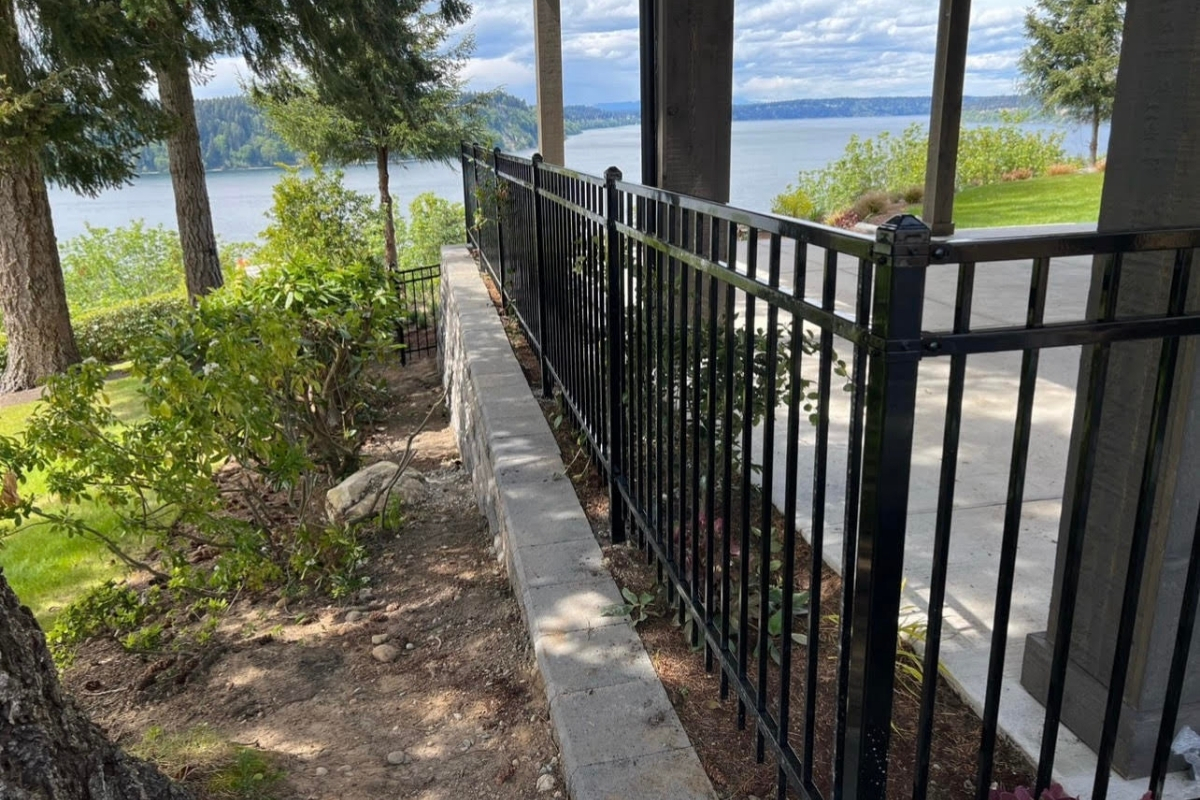
Homeowners aren’t just chasing a trend when they choose black aluminum fencing. They’re reacting to years of frustration with materials that demand constant upkeep. Wood needs restraining. Wrought iron needs rust treatment. Aluminum needs very little, and black happens to be the finish that photographs best against green lawns and lighter siding.
Not every black fence ages the same way; the coating underneath the color is what decides whether it looks new in year one or year ten.
How Aluminum Fencing Panels in Black Increase Property Value
Fencing sits in a small club of home upgrades that homeowners actually get money back on. Remodeling Magazine’s Cost vs. Value data suggests that mid-range fence projects can expect to recoup about 65 percent of their cost at resale, with higher returns in areas where outdoor living space is desired. Aluminum fencing tends to land on the stronger end of that range because it still looks new at resale, unlike wood or vinyl, which show wear far earlier.
Why Buyers Respond to Aluminum Differently from Other Materials
Buyers aren’t fence experts, but they notice the condition instantly. A black modern aluminum fence signals a maintained property before a buyer even steps out of the car, which matters more than most sellers realize.
| Fence Material | Buyer Perception at Resale |
| Aluminum (Black/Ornamental) | Reads as maintained, modern, and low-risk |
| Wood | Prompts questions about rot, staining, and replacement timelines |
| Vinyl | Seen as durable but can look dated if yellowed |
| Chain Link | Viewed as purely functional, minimal aesthetic value |
Skipping a fence upgrade altogether not only misses out on this bump but also runs the risk of a buyer mentally deducting the full replacement cost the second they see a failing perimeter.
The Visual Benefits of Black Aluminum Fencing
Black does something that no other common fence finish does well: it fades into the background just enough to frame a yard without taking over. That’s a big reason decorative aluminum fencing in black works across so many home styles, from craftsman to modern farmhouse.
1. How Black Interacts With Landscaping and Sightlines
Because black recedes visually rather than standing out, it keeps attention on the landscaping, the home’s exterior, and the outdoor living spaces behind it. Lighter fence finishes tend to compete with the greenery rather than frame it, which is part of why black has become the default choice for anyone serious about architectural design.
2. Durability and Low-Maintenance Advantages
This is where the research of most homeowners ends, and it’s the part you’ll want to understand before choosing a supplier. All black finishes are not the same. The coating industry rates exterior aluminum finishes using AAMA standards, and the difference between them explains why some black fences fade within a few years while others don’t.
3. What the AAMA Coating Rating Actually Means
AAMA 2604 identifies coatings that offer good color and gloss retention, lasting for years without fading or chalking despite exposure to intense sunlight and weather, while AAMA 2605 is an even higher standard, specifying coatings that exhibit exceptional resistance to UV radiation, chemical agents, and humidity. The finishes that are tested under these standards are exposed to accelerated weathering and salt-fog exposure before they are rated, a level of testing most homeowners don’t think to ask about.
4. Why This Matters More in Wet Climates
Coatings rated below these standards can start chalking or fading within a couple of seasons in a wet, coastal climate. A properly coated aluminum fence installation avoids that outcome entirely, which is exactly why coating grade, not just color, should be part of every homeowner’s checklist.
Security and Safety Benefits for Homeowners
A fence does more than mark a boundary; in many yards, it’s a legal safety requirement. Homeowners with pools, in particular, often don’t know how specific these rules get, and non-compliance has real consequences.
1. The 4-Inch Rule Most Homeowners Have Never Heard Of
The pool barrier codes call for a height of at least 48 inches, and no opening in the fence can allow a rigid 4-inch sphere to pass through. This is because a small child’s head is about 5 inches in diameter, and a 4-inch body can follow where a head can fit. Picket-style perimeter security fencing has to be spaced tightly enough to meet this standard, and not every fence on the market does.
2. Gate Requirements That Get Overlooked
Beyond picket spacing, a compliant pool gate must be self-closing, self-latching, and swing outward away from the pool, with the latch release positioned at least 54 inches above ground level. Skipping this detail not only risks a bad inspection but also removes the exact level of protection the code was written to provide.
A fence that looks secure and a fence that legally qualifies as secure are two very different things; only one of them holds up during an inspection or, worse, an incident.
How to Choose the Right Aluminum Fencing Panels in Black
Picking a supplier on looks alone is where most home improvement projects run into trouble later. A few specifics are worth confirming before committing to any quote.
- Picket Gauge and Coating Grade
Thicker picket gauge resists impact and wind load better over time, and pairing it with an AAMA-rated coating protects the investment long after installation. Together, these two specs matter more than color choice or panel style.
- Confirming Code Compliance Before Installation
Anyone installing fencing near a pool or play area should confirm picket spacing and gate hardware meet local barrier codes before the project begins, not after an inspector flags it. This one step avoids rework, fines, and the liability of a non-compliant barrier.
Choosing Fencing That Actually Holds Its Value
Black aluminum fencing panels deliver on more fronts than most homeowners initially realize: resale value, a coating system engineered to resist fading, and safety compliance built into the design itself. Skipping the details covered here, from coating grade to gate hardware, is exactly how homeowners end up with a fence that looks good for a season and falls short for the next twenty years.
Puget Fence Inc. has spent over two decades installing wood, vinyl, chain-link, and ornamental aluminum fencing across Kitsap, Pierce, Mason, and Jefferson Counties, backed by more than 32,000 completed projects. Our team works directly with homeowners to match picket gauge, coating grade, and design to each property, rather than defaulting to a one-size-fits-all panel.
Property boundaries and pool areas aren’t projects worth guessing on, and code violations or premature fading are costly to fix after the fact. Call Puget Fence Inc. today at (360) 509-5095 to schedule a consultation and get a fence built to hold its value and its compliance for years to come.