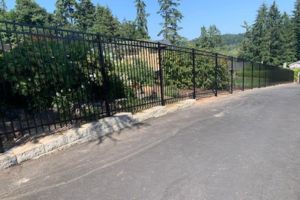
A fence is supposed to protect your investment, not become one you have to keep repairing. But that’s what happens with most traditional fencing. Wood swells, splits, and rots from the inside out, often before the damage shows. Wrought iron is stately for a few years. Then it starts rusting at the joints. If you never touch up the coating, it will weaken the structure in fifteen years. If left unchecked, this deterioration will reduce curb appeal, compromise security, and ultimately necessitate a full replacement anyway. This is precisely the gap fencing made from black aluminum was engineered to close, a shift our team at Puget Fence Inc. has watched accelerate year after year.
In this blog, we’ll break down what black aluminum fencing actually is, why it outperforms wood and wrought iron at a material level, and where it makes the most sense for your property, along with design options and maintenance needs.
What Is Black Aluminum Fencing?
It helps to understand what happens at the surface level before you pick a material for your property line. The sections below discuss the science and everyday applications.
Understanding Black Aluminum Fencing
Black aluminum fencing is built from extruded aluminum, typically a 6063-T6 alloy chosen for its strength-to-weight balance, finished with a powder-coated aluminum fence coating. Powder coating is different from liquid paint in that it is electrostatically applied to a dry polymer and baked at 350°F to 400°F until a film several times thicker than normal paint is produced.
It’s not just the coating that makes aluminum different from iron. The metal reacts with oxygen to form a thin oxide film that acts as a natural barrier to corrosion. If scratched, this layer regenerates almost instantly, which is why aluminum doesn’t rust as iron does. It protects itself at the level of molecules, and the powder coat is just an extra layer of that protection.
Common Uses for Black Aluminum Fencing
Aluminum fencing panels in black show up in more places than most homeowners realize:
- Pool enclosures meeting safety-code barrier requirements.
- Front-yard boundaries where curb appeal matters most.
- Backyard perimeters for pets and children.
- Commercial properties needing a clean, uniform look.
- Garden and courtyard dividers paired with decorative gates.
Why Black Aluminum Fencing Is Becoming a Popular Choice
Materials science explains part of this shift, but so does the math on long-term ownership. A good quality aluminum fence typically lasts 30 to 40 years with just about no maintenance. An unmaintained wrought iron fence can show visible rust in under 10 years, and cedar often needs restaining every two to three years just to reach a 15- to 20-year life span.
That gap in labor and performance is why modern residential fencing trends have moved so decisively toward aluminum. Homeowners aren’t just chasing a look. They’re selecting a material that requires nothing of them after it’s installed.
A fence you install once and never think about again is worth more than one you admire for a season and repair for a decade.
Key Benefits of Black Aluminum Fencing Over Traditional Fences
Here’s how the material compares on the factors that actually affect ownership:
| Factor | Black Aluminum Fencing | Wood / Wrought Iron |
| Corrosion resistance | Self-healing oxide layer, won’t rust | Iron rusts without recoating every 3–5 years |
| Weight | Up to 70% lighter than steel | Iron is heavier, slower to install |
| Coating durability | Resists chipping and UV fading | Paint on iron chips, needs touch-ups |
| Moisture response | Unaffected by rain or humidity | Wood swells, warps, and can rot |
| Long-term upkeep | Occasional rinse | Sanding, sealing, or repainting cycles |
This rust-resistant fence performance is the biggest reason homeowners in wetter climates make the switch. Wood and iron decay faster in standing water and humidity, but aluminum’s oxide layer will do just as well, if not better, with prolonged moisture.
Black Aluminum Fencing vs. Traditional Fences
Weight tells part of the installation story too. Because extruded aluminum sections are hollow yet structurally rigid, residential aluminum fencing can weigh up to 70 percent less than comparable steel or wrought iron, without sacrificing the strength needed to hold panels and gates in place. That translates into faster installation and less strain on posts and footings over time.
There’s a visual argument as well. Powder coating offers a textured finish that resembles traditional wrought iron, so homeowners can enjoy the ornamental look of decorative metal fencing without the worry of corrosion that has always plagued it.
Where Black Aluminum Fencing Works Best
Outdoor security fencing made from black aluminum performs especially well in specific situations. Aluminum has a layer of oxide on it that resists that exact chemical attack. Properties on the coast and waterfront benefit most, because salt air is one of the fastest ways to degrade untreated iron or steel.
Pool enclosures are another strong fit. Aluminum panels with close picket spacing can meet typical safety barrier requirements. These typically require a minimum height of 48 inches, no opening large enough to allow a 4-inch sphere to pass through, and gates that are self-closing and self-latching with the release mounted a minimum of 54 inches above grade. For homeowners in Poulsbo, Silverdale, Bremerton, Gig Harbor, and Bainbridge Island, WA, where damp weather and proximity to water are constant factors, this combination of code compliance and corrosion resistance is difficult to match.
Design Options Available with Aluminum Fencing Panels in Black
The decision is partly based on material performance. The other half is the look of the fence on your property, and aluminum offers more range than most homeowners expect. Several aluminum fence styles are available:
- Classic picket-style panels for a traditional, symmetrical look.
- Flat-top or puppy-picket designs for added child and pet safety.
- Estate-style panels with decorative finials for a formal entrance.
- Privacy-oriented panels with tighter picket spacing.
- Custom gates matched to your existing property boundary fence.
Because the extrusion process allows fine detail work, these fence design ideas adapt easily to modern builds and traditional Pacific Northwest homes alike.
Factors to Consider Before Installing Black Aluminum Fencing
A few practical questions are worth answering before scheduling fence installation. Check your property lines and HOA restrictions. Some communities have rules about height or style. Determine if the fence needs to comply with a pool safety barrier code, which impacts picket spacing and gate hardware.
Climate exposure matters too. Properties closer to the water gain the most from aluminum’s corrosion resistance, though the material performs reliably inland as well. Finally, think through purpose. A fence built for privacy uses a different panel style than one built purely as a decorative property boundary fence line.
Maintenance Tips to Keep Black Aluminum Fencing Looking New
One clear advantage of low-maintenance fencing is how little it asks of you. A quick rinse every few months with a garden hose will remove dust, pollen, and salt residue before they dull the finish. For tougher dirt, a mild soap and water solution will work well.
Beyond that, periodic inspection of gate hinges and latches keeps the hardware operating smoothly, and small scratches can be touched up with matching powder-coat paint. The oxide layer under the coating will reform spontaneously. Therefore, a small scratch on the surface is not as dangerous as it would be for bare iron.
Building a Fence That Works for You, Not the Other Way Around
Choosing between traditional materials and black aluminum fencing comes down to what you want your fence to demand of you over the next few decades. Wood and wrought iron require an ongoing cycle of staining, sealing, and rust prevention. Aluminum’s appearance is preserved with almost no attention, while still meeting the practical needs of pool enclosures, boundary lines, and everyday security, because of its self-healing oxide layer and tough powder-coat finish.
At Puget Fence Inc., we’ve spent years helping homeowners move away from the maintenance cycle that traditional fencing creates. Our team works with aluminum fencing panels in black across a range of styles, from classic picket designs to estate-style panels with custom gates, bringing the same attention to code compliance and craftsmanship to every property we serve, including homes throughout Poulsbo, Silverdale, Bremerton, Gig Harbor, and Bainbridge Island, WA.
If your current fence is already showing signs of rot or rust, waiting rarely makes the decision easier or less costly down the line. Reach out to our team to talk through the right aluminum fencing style for your property, and let’s get your project scheduled before another season of wear sets in. Call us at (360) 509-5095.