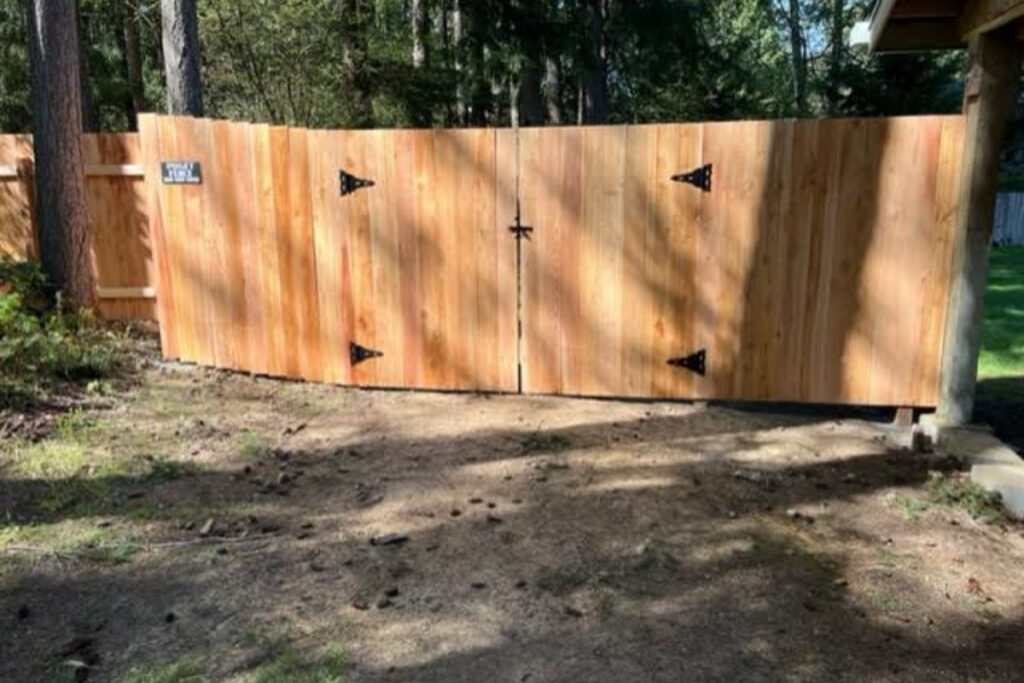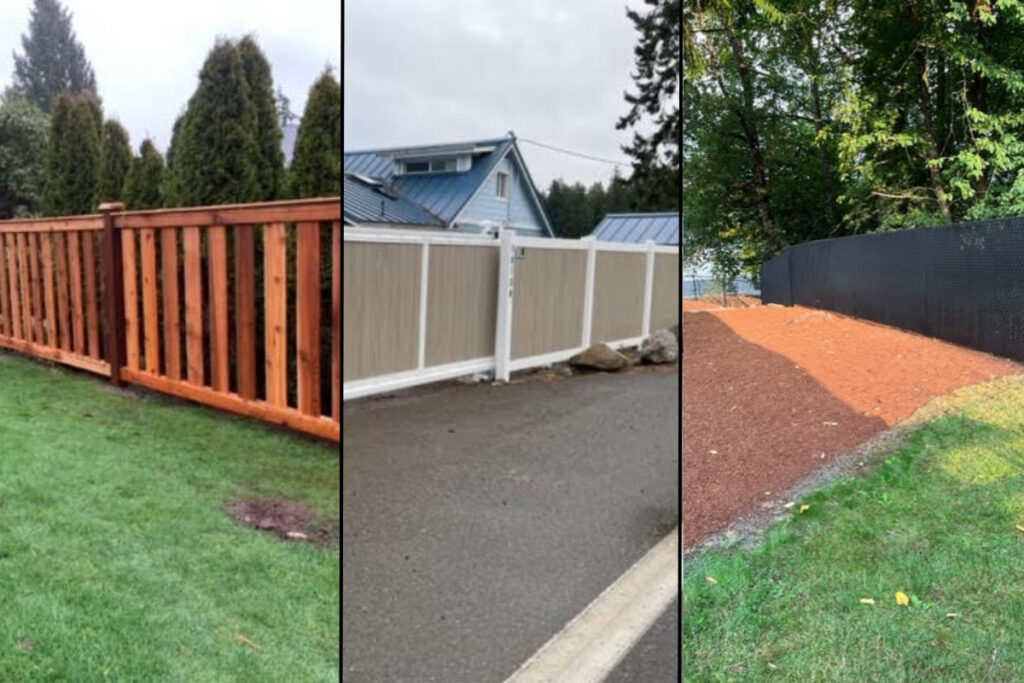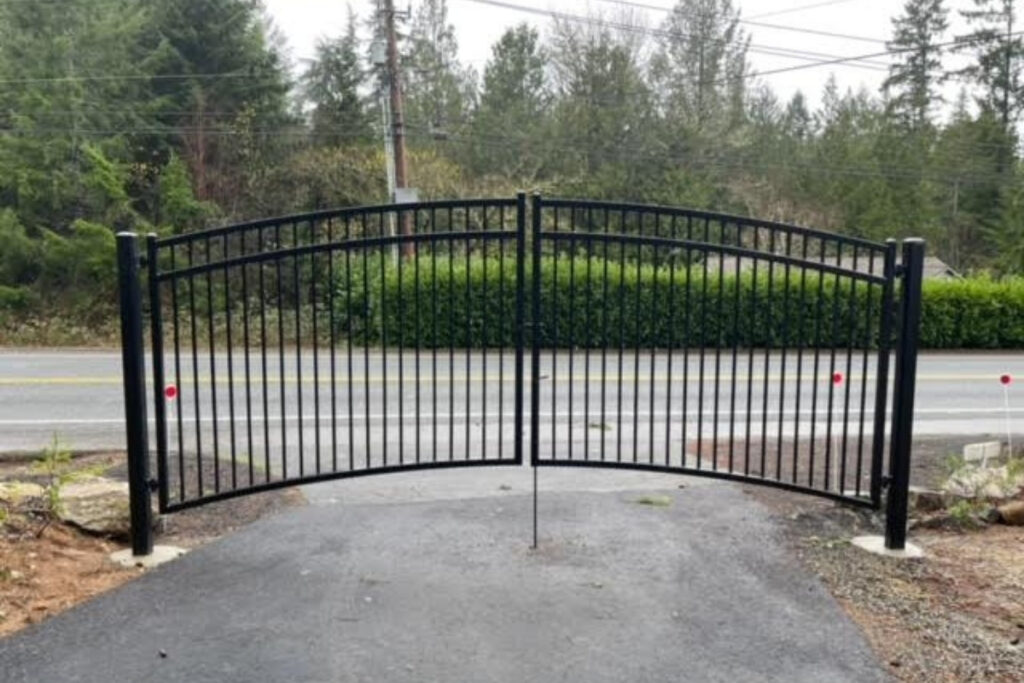

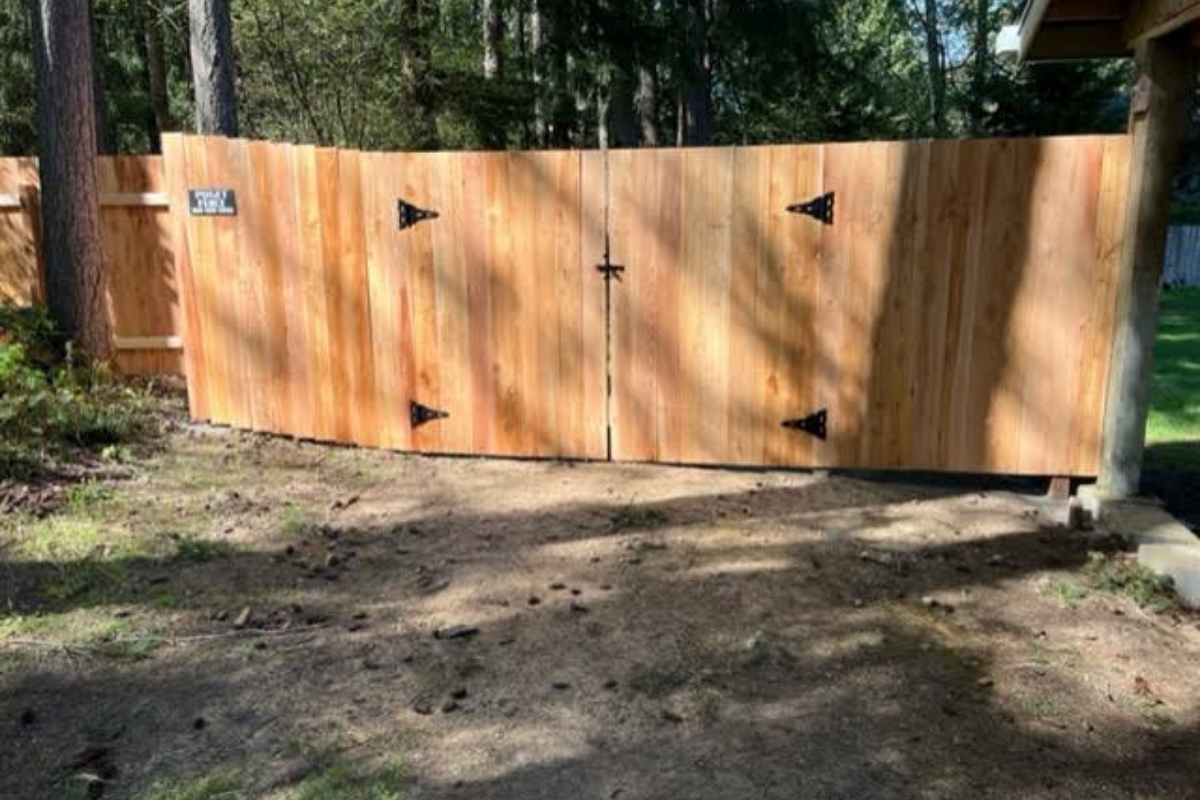
A driveway gate that sags even slightly is already failing structurally. In just a few months, what looks like a small tilt today can turn into a gate that won’t latch, drags on the ground, and leaves your property open to the public. Most homeowners ignore early warning signs, and that decision always costs more in the long run. At Puget Fence Inc., we’ve diagnosed and corrected hundreds of these failures across Kitsap, Pierce, Mason, and Jefferson Counties, and we know exactly what goes wrong and why.
This blog breaks down the five most common causes of a sagging driveway gate, what is actually happening with the structure, and how a professional fence company fixes each one the right way, not just for a short time.
Why a Sagging Driveway Gate Shouldn’t Be Ignored
A driveway gate that sags is already failing at its primary job. The longer it’s left unaddressed, the more structural stress compounds across the entire system:
- Hinges absorb uneven load and begin pulling away from the post
- Gate frames are out of square, making latching impossible
- Posts that are already shifting accelerate under added stress
- A driveway gate dragging on the ground wears down the hardware and the frame simultaneously
The damage doesn’t stop; it keeps getting worse until a repair turns into a full replacement.
A gate that sags 2 inches today will drag on the ground within a season. Structural failures don’t wait for convenient timing.
1. Weak or Shifting Gate Posts
The post is the foundation of your entire driveway gate system. When it fails, everything connected to it fails with it. Here’s what to look for and how it gets corrected.
Signs of Post Failure
- The gate leans consistently to one side
- Post wobbles under light pressure
- Visible cracking or heaving in the surrounding concrete
How a Fence Company Fixes It
| Condition | Professional Fix |
| Minor lean | Re-plumb and re-pack with fresh concrete |
| Severe shift | Full removal and reinstallation |
| Rotting wood | Replace with a pressure-treated or steel post |
| Cracked footing | Break out old concrete, re-pour deeper |
For proper gate post repair, you need to set the posts at least one-third of their total length below grade and use the right concrete mix for the type of soil.
2. Worn or Loose Hinges
Hinges carry the full weight of a driveway gate every time it moves. That concentrated load causes real wear and tear on the machine over thousands of cycles.
Common Hinge Issues
- Bolts have backed out of the post or frame
- Hinge plates are visibly bent or corroded
- The gate swings unevenly and scrapes on one side
How a Fence Company Fixes It
Gate hinge replacement involves more than swapping hardware. A professional fence company selects hinges rated specifically for the gate’s actual weight and usage frequency. After the gate is installed, gate alignment repair is performed to verify swing, clearance, and latch engagement, not just how well the hardware fits.
Most people don’t realize that a gate is fixed on only one end. That means 100% of its load, wind, weight, daily use, and transfers through a single post and two or three hinges. No fence panel can handle that much stress.
3. Gate Frame Warping
Even a properly installed gate can warp over time. Frame distortion is gradual, which is exactly why it often goes unnoticed until the gate stops functioning altogether.
Causes of Warping
- Wood gates absorb moisture during wet seasons, then dry and shrink repeatedly
- Untreated or improperly sealed lumber warps far faster than cedar
- Metal gates expand and contract with temperature shifts
How a Fence Company Fixes It
- Minor wood warp: Diagonal tension rod or turnbuckle brace pulls the frame back into square
- Severe warp: Full frame or panel replacement
- Metal distortion: Straighten professionally or replace the affected section
Cedar is the best wood for gates in the Pacific Northwest. Its natural oils keep moisture and fungus from growing, which are two main causes of warping in this climate.
4. Improper Initial Installation
Some driveway gate problems don’t develop over time; they’re built into the original installation. The gate just hasn’t failed visibly yet.
Installation Mistakes
- Posts are set too shallow without adequate concrete depth
- The gate frame was not squared during installation
- Hardware selected by availability, not by gate weight or load requirements
- Insufficient ground clearance was built into the original design
How a Fence Company Fixes It
- Full assessment of what was installed incorrectly
- Removal of compromised posts, hardware, or frame sections
- Reinstallation using correct measurements and rated hardware
- Post-installation testing of swing, clearance, and latch alignment
Cutting corners during driveway gate installation doesn’t save you money; it just pushes the cost forward, plus interest.
5. Ground Movement and Weather Conditions
The ground under a gate is always moving. In Western Washington, rain, frost, and root growth constantly move the soil, which makes the ground less stable.
Environmental Factors
| Factor | Impact on Your Gate |
| Heavy rainfall | Saturates soil, loosens post footings |
| Frost heave | Pushes posts upward, distorts alignment |
| Tree root growth | Cracks footings, lifts post bases |
| Seasonal drought | Soil shrinks, post anchors loosen |
How a Fence Company Fixes It
- Re-grade soil around posts to redirect water away from footings
- Install a gravel sub-base for improved drainage and stability
- Use deeper footings in moisture-heavy or frost-prone zones
Fixing environmental problems the right way is what makes a repair last, and one that breaks again in a season.
When to Call a Fence Company for a Sagging Driveway Gate
These signs require immediate professional attention:
- The gate drags and won’t close fully
- Posts are leaning or show visible cracking at the base
- Hinges have separated from the post or frame
- The latch no longer aligns despite repeated adjustments.
If you’re asking, “Why is my driveway gate sagging?” and recognizing more than one of the above, waiting is the wrong move. Driveway gate repair handled early is always less disruptive than replacing the whole thing.
How to Prevent a Sagging Driveway Gate in the Future
- Inspect hinges and post bases every 6–12 months
- Lubricate all moving hardware each season
- Seal wood gates annually before the wet season
- Every few years, have a professional check it out to catch any early movement
The best way to make your gate last a long time is to have regular maintenance through professional fence company services.
The Final Word on Sagging Driveway Gates
A sagging driveway gate is always a structural problem. Post failure, hinge wear, frame warping, poor driveway gate installation, and ground movement each have distinct causes and specific fixes. If you don’t pay attention to any of them, you’ll have to replace everything much faster.
For more than 20 years, our team at Puget Fence Inc. has been providing professional fence repair services in Kitsap, Pierce, Mason, and Jefferson Counties. From gate hinge replacement and gate post repair to complete gate alignment repair and new driveway gate installation, we handle every stage of the process correctly the first time.
If your driveway gate is dragging, tilting, or showing early signs of failure, don’t wait. Call Puget Fence Inc. today at (360) 509-5095 for a free consultation and estimate.